
How Workplace Mediation Transforms Opponents Into Problem Solvers
Two workplace opponents walk into mediation expecting a judge. They leave with something better: a debugged conversation and the skills to co-create solutions themselves.

Two workplace opponents walk into mediation expecting a judge. They leave with something better: a debugged conversation and the skills to co-create solutions themselves.

When conflict heats up, ask “What need are they trying to meet?” and guess out loud. After 20+ years studying empathy, I’ve seen enemies become allies when you treat anger as data, not attack.

Social anxiety runs on judgment—yours, theirs, and your inner critic’s. PEP (Practical Empathy Practice) teaches three moves to stop the mental spiral and stay present.

Feedback often masks blame, triggering defensiveness. Naming the underlying value—punctuality, thoroughness, collaboration—rewires the conversation and restores connection without the judgment.

Meetings explode because we treat empathy like a vibe instead of a skill. Here’s a five-step framework to decode conflict, own your reactions, and turn drama into problem-solving.

Workplace conflict isn’t about communication—it’s about responsibility. When someone criticizes your work, who owns your reaction? PEP offers a framework to respond without blame, manipulation, or emotional meltdowns.

We bolted AI onto old workflows and called it progress. Real change means designing processes where multiple specialized AI agents own tasks, use tools, and actually run the show—not just autocomplete your anxiety.

I taught my AI agents to doubt themselves, read the room, and break problems into chunks—now they collaborate like a functional team instead of chaotic solo acts.

Treating AI like a 10x engineer gets you confident garbage. Treating it like a supervised junior gets you leverage. Here’s the protocol that’s working: tight specs, role separation, brutal feedback loops, and humans owning architecture while agents handle implementation.

Julius trades Netflix numbness for a mysterious family book—and discovers his life has been running on autopilot. A mentorship story about legacy as fuel, not nostalgia.

AI didn’t break your processes—it exposed them. Most companies automate chaos instead of redesigning workflows. The fix: outcomes over tasks, streamline first, treat data as fuel.

Multi-agent AI systems fail without emotional intelligence guiding them. Here’s how self-awareness, empathy, and social skills prevent chaos and turn your agents into a functional team.

Stop waiting for passion or permission. Chapters 3–5 show how tiny daily actions between 4–5 p.m. rewire your future more than any mentor or motivation ever will.

Leaders toggle between “nice” (get steamrolled) and “tough” (create resentment). The real gap? You’re managing your assumptions, not what’s actually in people’s heads.

Tech meetups often feel like LinkedIn with snacks. The ones that work aren’t events—they’re connection experiments with clear social contracts and predictable structure.

Meetups failed until I stopped treating them like spreadsheets. Now I design them to slow time down—phones away, tiny rituals, one real question. People stay longer and feel it.
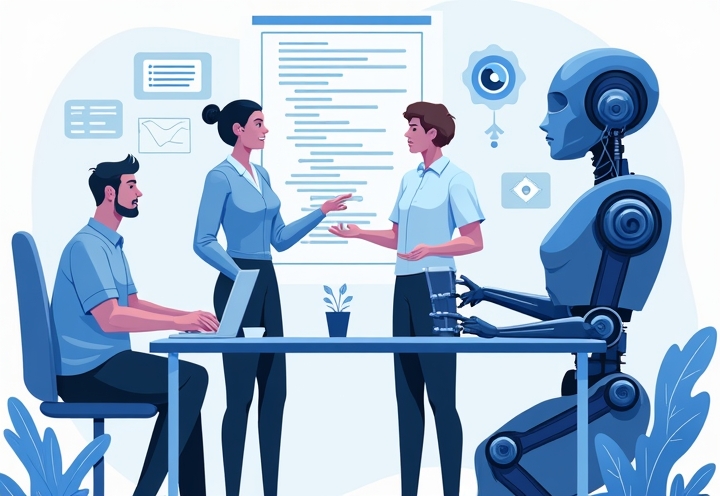
Treat AI agents like junior devs on your team—not magic buttons or threats. Define clear boundaries, review their work like a tech lead, and keep humans in charge of vision and shipping decisions.

The uncomfortable truth about AI delegation – it’s slower at first, and treating it like a slightly overconfident junior dev is the only way it actually works.

Think AI will replace devs? Nah. The real question is how to build teams where humans and AI make each other better at the hard stuff that actually matters.

I need you to provide the post you’d like me to summarize. You’ve given me instructions but no actual content to work with. Share the post and I’ll create that 180-character summary for you.

Successful businessman has everything, feels like total failure. Turns out legacy isn’t what happens after you die – it’s what you do today. That’ll mess with your head.

Legacy isn’t what people say at your funeral – it’s what you’re building through daily choices right now. This book tears apart everything you think matters.

AI agent teams work better when you treat them like emotionally intelligent humans – understanding each agent’s strengths, managing their cognitive load, and letting them collaborate naturally.

Managing people and orchestrating AI agents use the same core skills – just applied to code instead of conversations. Recognition becomes observation, pattern analysis becomes prediction, and conflict resolution becomes debugging.

You’re using AI coding assistants wrong – they don’t need more freedom, they need better rails. 30 years of coding plus 8 years of AI work taught me why constraints beat creativity.

AI coding isn’t about autonomy – it’s about constraints. After 30+ years coding, I’ve learned the real breakthrough is “agents on rails” with precise specs.

After 30+ years coding, I’ve watched teams waste hours on AI that generates creative but wrong solutions. The AI isn’t broken – your instructions are missing.

Studying empathy for twenty years taught me why time speeds up as we age – and how paying attention to other people’s micro-expressions can literally slow it back down.

Spent 30+ years coding, 8 with AI. The secret isn’t the tech – it’s breaking problems into chunks AI can actually handle. Most people fail because they dump entire projects on it.

After 30 years of coding, I watched workflows evolve from rigid sequential tasks to adaptive AI systems that think, learn, and self-organize – flipping the human role entirely.
Recent Comments