
Why Your Words Land Wrong on Humans and AI
Most people blame the AI when prompts go sideways. The real skill is noticing how your words land, on humans and machines alike.

Most people blame the AI when prompts go sideways. The real skill is noticing how your words land, on humans and machines alike.

Using cognitive empathy with AI changes your output from lifeless to human-sounding. The lever isn’t the AI. It’s how clearly you type your intent, tone, and context.

When your team seems “resistant,” they’re protecting something. Get curious about what they value. Shift “you made me feel” to “I feel this because I value that.” Changes everything.

Slow down your attention, not just your words. Pausing before you speak, breathing on purpose, and sitting with silence leads to conversations that actually land.

Slow down your attention, not just your words. Pausing before you speak, breathing on purpose, and sitting with silence leads to conversations that actually land.

Slow down your attention, not just your words. Pausing before you speak, breathing on purpose, and sitting with silence leads to conversations that actually land.

Empathy improves AI prompts. Better emotional input = better output. Old-school communication skills work here too, not just with people.

Your brain runs a live map of other people. AI mimics the words but can’t stand inside another person’s view. That gap is still yours.

Early empathy practice feels clunky and awkward. Baby giraffe legs, not a smooth upgrade. That friction is normal. You’re not failing; you’re installing new code.

In 2042, AI handles thinking. The rare advantage? Reading humans. Empathy, trust, and curiosity are what machines can’t replicate, and what keeps people like Lena getting promoted.

Cognitive empathy means modeling *their* emotional state, not soothing your own. Bots can sound warm; the human edge is seeing the mind behind the words.
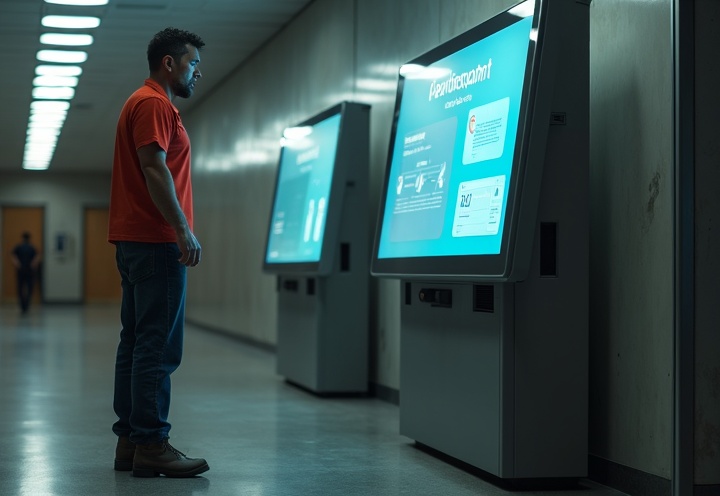
City Hall’s “empathy kiosk” named feelings. A human named *meaning*. That gap is the difference between cognitive empathy and its cheap imitation.

Multitasking is fast task-switching with a fee each switch. Your brain has a narrow doorway. Protect focused blocks. Pair one automatic task with one hard task. yay!

Chapter 15 of *A Practical EmPath* gives leaders a values-based tool for political talks before misinformation cracks team trust. 14-min video included.

“Good vibes only” is gaslighting with a smile. When we rush to reassure, we signal “your pain isn’t welcome” – and quietly serve our own need for comfort.

Workplace debates turn into volume contests. PEP (Practical Empathy Practice) uses observation, feelings, and needs to find shared ground – so you can persuade without pushing.

Debates get loud when people feel unheard. PEP (Practical Empathy Practice) uses observation, feelings, and values to find common ground and turn combat into problem-solving.

Cognitive empathy isn’t agreement or forgiveness – it’s a conflict tool that helps you stay calm, spot solutions, and de-escalate by understanding what drives someone’s behavior without absorbing their emotions.

We talk fast and miss signals – tight jaws, pauses, hidden feelings. Slow down until time feels slower. Presence calms you, helps you listen, builds trust. Chapter 23 teaches PEP: name your judgment, find the need underneath, write it down.

We fight over positions while real needs hide backstage. Cognitive empathy cuts through: listen for needs, name inner states, pause for self-empathy first.

People are hurting but help is slow. AI chatbots can offer steady support between crises – studies show real drops in distress and reactivity. Less reactivity means easier repair.

Texting “FYI, lmk” feels efficient until you’re drowning in confusion threads. Brevity isn’t concision – and the difference costs you time, clarity, and trust at work.

Forced positivity can block real connection. Chapter 21 shows how “happy them up” energy teaches suppression and why empathetic presence beats silver linings every time.

Your team matches your stress reflexes, not your intentions. Here’s what psychological safety actually looks like in meetings – and a practice that rewires how you lead under pressure.

Cognitive empathy turns workplace conversations from courtroom battles into actual problem-solving. One shift in how you frame feedback can build the psychological safety your team is missing.

Anger feels like truth, but it’s usually just an unmet need yelling. Learn a 4-step system to pause, guess what the other person values, and speak yours clearly.

Social anxiety is a fear loop your brain built – not who you are. Chapter 7 of my book shows how cognitive empathy and neuroplasticity can rewire that response.

Conflict at work isn’t a logic problem – it’s emotion plus need trying to be heard. After 20 years studying empathy, I use a three-step cycle to turn tense meetings into clear conversations.

Phone pings once, attention vanishes, partner’s face collapses. That micro-abandonment is called technoference, and it’s wrecking your couch time without you noticing.

Task switching isn’t laziness – it’s your brain paying a real switching cost. Each flip leaves attention residue that tanks focus and manufactures fatigue.
Recent Comments