Your brain switches tasks like an old computer freezing apps. Research shows “attention residue” lingers, mental load spikes, and mistakes multiply. Treat focus as stress prevention.
The story
🟢 Your brain isn’t “multitasking,” it’s tab-crashing I keep trying to “do it all,” and my brain keeps replying, “Cute.” Psych researchers point out that task switching creates real mental blocks, and those blocks can eat a surprising chunk of your productive time. The kicker is *attention residue*: part of my mind stays stuck on the last task, like a loading screen that never fully goes away.
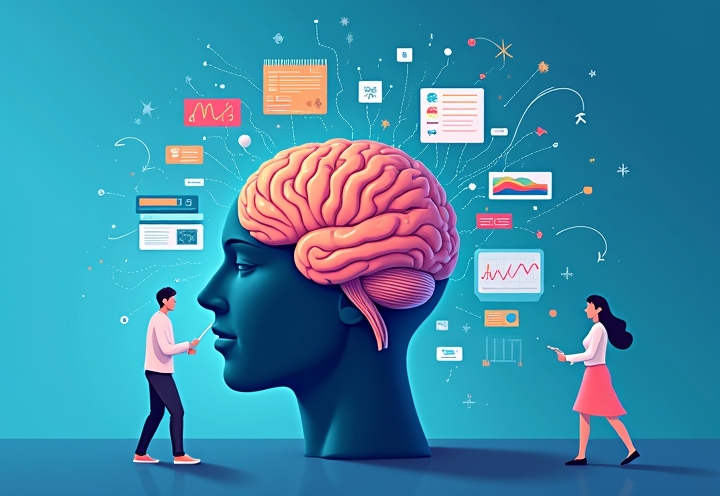
🟢 Why does switching feel like lag? Neuroscience backs the vibe: for complex stuff, our brains run more like a single-lane road than a six-lane highway. When I jump from email to writing to math-y thinking, my brain has to “reconfigure” each time, like an old computer freezing one app to open another. That ramp-up costs energy, raises mental load, and invites more mistakes, especially with memory, numbers, and language.
🟢 Is the “IQ drop” thing a personality flaw? One university study found heavy multitasking can blunt performance in a way that looks a lot like sleep loss. Not because people are “lazy,” but because the brain is doing expensive gear-changing. Most of us are not in the tiny group who can juggle well, so we pay in fatigue and irritability.
🟢 Want a mental health-friendly experiment? I wonder what happens if we treat focus like *stress prevention*, not hustle culture. If you want to try it, you could single-task until “done-done,” add a short transition buffer, use a simple timer, or flip on Focus Mode. You might even save the light multitasking for chores; for creative or problem-solving work, going deep can feel like your nervous system finally gets to exhale.







Recent Comments