After 30 years of coding, I watched workflows evolve from rigid sequential tasks to adaptive AI systems that think, learn, and self-organize – flipping the human role entirely.
The story
After 30 years of coding and 8 years deep in AI, I’ve watched entire workflows become archaeological artifacts.
The old way? Sequential. Manual. Every task waiting for the one before it to finish. Bottlenecks everywhere. Error rates that made you wince.
Now? AI-powered orchestration dramatically improves efficiency and reduces errors. Not through brute force – through something closer to actual thinking.
Here’s what changed: workflows stopped being rigid instruction sets and became adaptive systems. They process unstructured data. They understand context. They choose optimal paths on-the-fly. When workload spikes, they scale without asking permission.
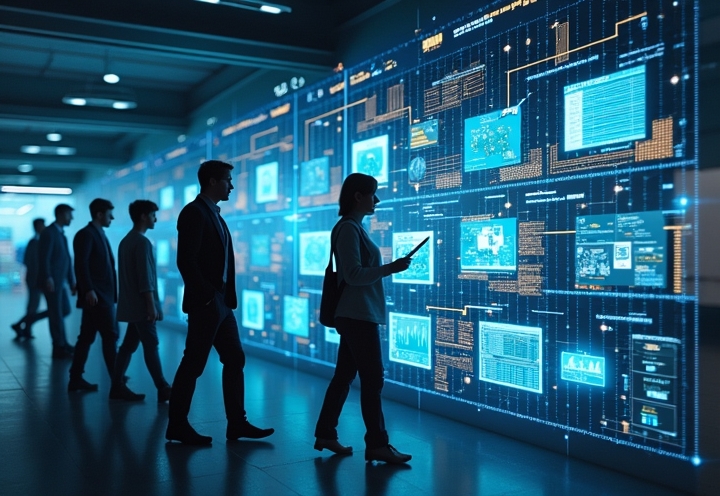
The platforms enabling this run autonomous agents that communicate with each other. One agent plans, another executes, a third verifies. They maintain memory across interactions. They learn. A supervisor delegates to worker agents based on real-time conditions, and the whole system self-monitors for errors.
Which means the human role flipped entirely.
We’re not executing tasks anymore. We’re designing agentic workflows. Engineering prompts that maximize agent performance. Building conversational interfaces where natural language guides adaptive systems. Providing strategic oversight while agents handle the repetitive grind.
The skills that matter now? Orchestrating autonomous agents. Advanced prompt engineering. Managing agent memory and error handling. And – critically – bringing the uniquely human stuff: creativity, emotional intelligence, meaningful connection.




Recent Comments