
Stop Fighting Your Coworkers and Start Solving Problems
Cognitive empathy turns workplace conversations from courtroom battles into actual problem-solving. One shift in how you frame feedback can build the psychological safety your team is missing.

Cognitive empathy turns workplace conversations from courtroom battles into actual problem-solving. One shift in how you frame feedback can build the psychological safety your team is missing.

Task switching isn’t laziness – it’s your brain paying a real switching cost. Each flip leaves attention residue that tanks focus and manufactures fatigue.
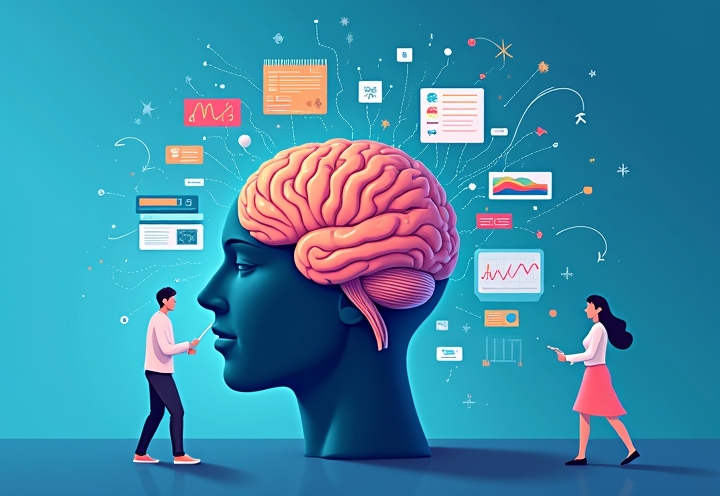
Your brain switches tasks like an old computer freezing apps. Research shows “attention residue” lingers, mental load spikes, and mistakes multiply. Treat focus as stress prevention.

Task switching fries your brain like a glitchy console, leaving sticky attention residue that tanks your focus. Want your creative sparks and mental health XP back?

Ever wonder why bouncing between tasks turns your brain into glitchy oatmeal? Switch cost is real, and deep work might be your escape hatch from the frenzy.

You can ground chaotic arguments by ditching future-tripping, reframing judgment as unmet needs, and reflecting feelings back without agreeing or caving.

Conversations move too fast, cues get missed, and we react before thinking. What if you could slow time in tense talks by chunking the exchange and reflecting back what you hear?

When you think ideas get stolen, you’re chasing ghosts. Copyright guards what you build, not brain sparks. Agreements and docs do the heavy lifting where law can’t.

Off-grid ranch in Jalisco’s mountains offers solar power, spring water, hiking, hot tub, cold plunge, kitchen, WiFi, and workspace—designed for solo reset or group retreat.

Escape burnout at a solar-powered mountain ranch with WiFi, hiking, tennis, fresh food, and optional solitude—where high-performers recharge without the noise.

Escape the email grind to Mexico’s mountains. Off-grid ranch with WiFi, trails, and space to reset. Trading burnout for pine trees and clarity—one resident’s story.

AI agents are overhauling workflows end-to-end, but legacy systems, organizational resistance, and data quality issues create serious implementation hurdles worth navigating.

Rushing through conversations creates emotional disconnection. Learn how mindful pauses transform shallow exchanges into genuine understanding, backed by 20 years of research.

Cognitive empathy can slow down reactive moments by prompting you to check your own feelings and guess others’. The practice sharpens presence, stretches time, and turns blur into clarity.

Cognitive empathy can manipulate when paired with poor integrity. Learn to spot false support that guilts you into compliance versus authentic requests that respect “no.”

Learn the 20-year-tested skill of cognitive empathy that turns team conflicts into collaboration by accurately naming what people feel and need, then verifying it neutrally.

Discover why your logical arguments fail in negotiations and learn research-backed techniques like labeling emotions and strategic silence that make counterparts drop their defenses and reach better deals.

Empathy isn’t emotional—it’s a cognitive skill that cuts through conflict. After 20 years of research, here’s what actually works in tense conversations and why teams perform better.

Multi-agent systems with emotional intelligence roles—one detects stress, another de-escalates, a third stays analytical—might outperform single “genius” bots by adapting tone and pacing to human states in real time.

When conflict hits, we label people “enemies” to save mental energy. But empathy is a debugger—separate observation from judgment, ask what they’re protecting, and conflict can shift to alliance.

Politics often kills conversation, but practical empathy—perspective-taking plus moral reframing—can restore it. Three moves help: accept feelings without agreeing, stay present, reframe to uncover needs.

Leaders’ words often shine like polished scripts, but bodies leak truth. After 20 years studying empathy, I treat gut feelings as hypotheses—five practical steps to debug authenticity at work.

Two workplace opponents walk into mediation expecting a judge. They leave with something better: a debugged conversation and the skills to co-create solutions themselves.

When conflict heats up, ask “What need are they trying to meet?” and guess out loud. After 20+ years studying empathy, I’ve seen enemies become allies when you treat anger as data, not attack.

You’re not lazy—you’re overloaded. Creative Robot uses AI to research, write, schedule, and post content in your voice across platforms while you focus on what matters.

You’re writing captions at midnight, paralyzed by inconsistency. Creative Robot generates on-brand content, schedules posts, and handles SEO across 110+ languages while you reclaim your time.

We bolted AI onto old workflows and called it progress. Real change means designing processes where multiple specialized AI agents own tasks, use tools, and actually run the show—not just autocomplete your anxiety.

I taught my AI agents to doubt themselves, read the room, and break problems into chunks—now they collaborate like a functional team instead of chaotic solo acts.

Treating AI like a 10x engineer gets you confident garbage. Treating it like a supervised junior gets you leverage. Here’s the protocol that’s working: tight specs, role separation, brutal feedback loops, and humans owning architecture while agents handle implementation.

Julius trades Netflix numbness for a mysterious family book—and discovers his life has been running on autopilot. A mentorship story about legacy as fuel, not nostalgia.
Recent Comments