
How 9 Lost Hours Hide Your Team’s Potential
Workers lose 9 hours weekly to email chaos while rushed messages create exponential errors. One Microsoft study of 241,718 employees reveals intentional communication cuts rework by 25%.

Workers lose 9 hours weekly to email chaos while rushed messages create exponential errors. One Microsoft study of 241,718 employees reveals intentional communication cuts rework by 25%.

You’re not lazy—you’re overloaded. Creative Robot uses AI to research, write, schedule, and post content in your voice across platforms while you focus on what matters.

When I split AI tasks across specialized agents instead of dumping everything on one model, latency drops and quality improves. It’s orchestration over conversation.

You’re writing captions at midnight, paralyzed by inconsistency. Creative Robot generates on-brand content, schedules posts, and handles SEO across 110+ languages while you reclaim your time.

AI agents now plan, code, and test at senior-dev levels. The new bottleneck isn’t typing speed—it’s your ability to clarify intent, structure work, and review output.

AI lets you design software through prompts instead of typing every line. The challenge moved from writing code to framing problems, reviewing outputs, and orchestrating agent workflows—experience still matters, just upstream.
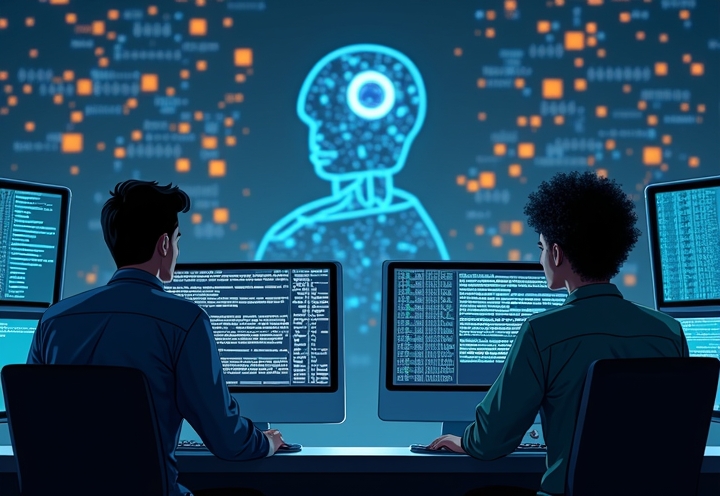
AI makes producing software easier, but good software still requires human judgment to frame problems, set constraints, and review output. The shift is from writing code to thinking clearly about what to build.

AI now scores higher than humans on empathy tests through consistent, calm responses—but we still crave human connection. The gap? It mirrors feelings perfectly but can’t actually feel them.

Meetings explode because we treat empathy like a vibe instead of a skill. Here’s a five-step framework to decode conflict, own your reactions, and turn drama into problem-solving.

Workplace conflict isn’t about communication—it’s about responsibility. When someone criticizes your work, who owns your reaction? PEP offers a framework to respond without blame, manipulation, or emotional meltdowns.
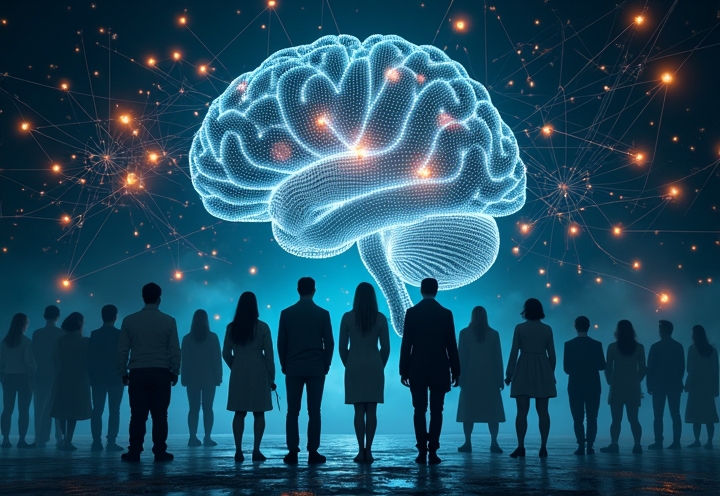
The next wave isn’t bigger LLMs—it’s architectures that mimic brain-like networks. Pathway’s BDH replaces static attention with modular neurons that adapt through experience.

We bolted AI onto old workflows and called it progress. Real change means designing processes where multiple specialized AI agents own tasks, use tools, and actually run the show—not just autocomplete your anxiety.
Non-devs are shipping real software by thinking clearly and describing intent. The gatekeepers are syntax and debugging, AI handles those now.

I taught my AI agents to doubt themselves, read the room, and break problems into chunks—now they collaborate like a functional team instead of chaotic solo acts.
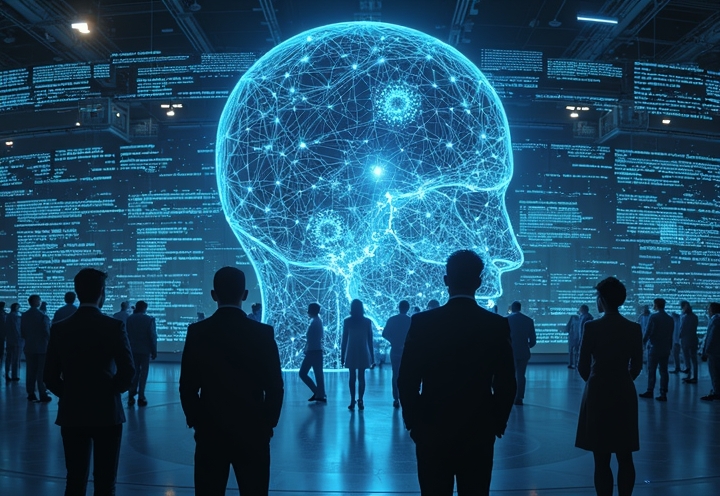
Treating AI like a 10x engineer gets you confident garbage. Treating it like a supervised junior gets you leverage. Here’s the protocol that’s working: tight specs, role separation, brutal feedback loops, and humans owning architecture while agents handle implementation.

Would you let AI agents deploy code at 3 a.m. without you? That question reveals where humans belong in the loop. Here’s my three-part system for deciding what to delegate.

Communication shortcuts feel fast but create hidden costs: vague messages force readers to decode, guess, and follow up. Real efficiency means sending clear, complete thoughts the first time.

LLMs autocomplete text. What if AI learned to simulate worlds, discover causes, and prove theorems instead? Three paradigm shifts worth watching.

Julius trades Netflix numbness for a mysterious family book—and discovers his life has been running on autopilot. A mentorship story about legacy as fuel, not nostalgia.

AI didn’t break your processes—it exposed them. Most companies automate chaos instead of redesigning workflows. The fix: outcomes over tasks, streamline first, treat data as fuel.

You don’t need traditional dev skills if you master directing AI tools like a tech lead—not just prompting, but architecting, chunking problems, and verifying output at scale.

AI can predict how you feel better than most humans, but doesn’t actually feel anything. Studies show it outperforms crisis workers at validation—and you can tune it.

Multi-agent AI systems fail without emotional intelligence guiding them. Here’s how self-awareness, empathy, and social skills prevent chaos and turn your agents into a functional team.

Forget fuzzy “human in the loop” advice. Use three knobs—risk, ambiguity, visibility—to decide where you stay in control vs. let agents run free.

Empathizing with critics isn’t weakness—it’s resistance training for your nervous system that builds real-time emotional control and upgrades how you handle conflict.

AI lies confidently—inventing citations, features, even violent phrases in calm audio. The future isn’t perfect models, it’s skilled users who cross-check, fact-verify, and keep humans in the loop.

You’re already debugging prompts without realizing it. Here’s when to iterate vs. nuke the chat—and the deeper skill underneath both moves.

Young professionals often wait for life to “start” after the next credential. Chapter 7 flips that: growth is self-directed, not assigned by institutions.

Stop throwing “do everything” prompts at AI. Break work into tiny, clear blocks with one role per task. Define context, constraints, and acceptance criteria first—AI executes, you architect.

Software that researches your audience, writes posts in your voice, and publishes on schedule—so you stop guilt-posting in bursts and vanishing for weeks.
Recent Comments