
Empathy at Work: Notice, Guess, Check
Empathy at work means pausing to ask what matters to someone before defending or advising. Feelings are information, not orders. Notice, guess, check.

Empathy at work means pausing to ask what matters to someone before defending or advising. Feelings are information, not orders. Notice, guess, check.

Why I ditched OpenClaw for Hermes after months of fixing the same breakage, and what popularity actually buys you when your tools fall apart.
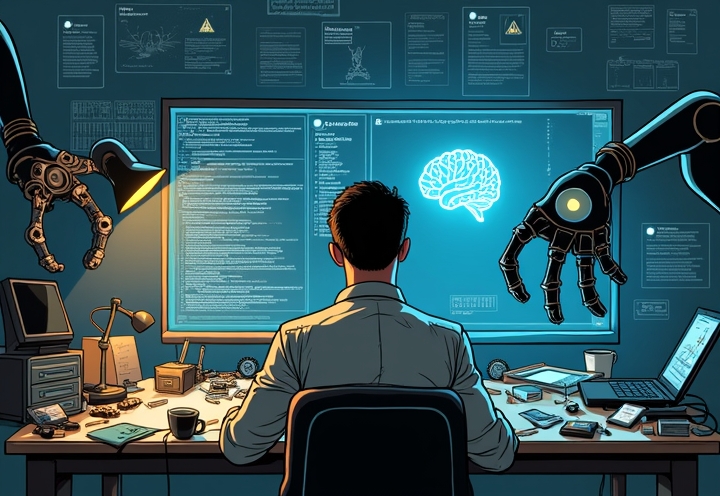
Spent February patching OpenClaw on repeat. Turns out the base was wobbly. Switched to Hermes Agent in April. Updates stopped breaking things. It actually learns.

Hiring someone isn’t a lifetime promise. If a robot mower replaces three workers, that’s a choice, not a crime. Forcing the job to continue is the real force.

Software is becoming the middleman nobody asked for. Agents are quietly eating the chore-app crowd. Bless their renewal emails.

Agents are shrinking the gap between “I want this done” and “done.” Mid-tier SaaS whose moat was “hard to build” is feeling the squeeze.

AI tells in writing, then a take on how coding tools, agents, and SaaS pressure are thinning out the software middleman.

SaaS might be fading as AI agents and code helpers let people skip the software middleman and just describe what they want done.

From “how do I do this?” to “do this for me.” Four shifts: coding gets simpler, subscriptions get shaky, agents do the work, apps go optional.

Software might be on its way out as agents shrink the gap between “I want this” and “done.” Subscription apps look shaky. What survives?

Software’s been the hallway between wanting a thing and getting it. Agents shrink the hallway. Generic apps with no special data are on notice.

AI is shrinking the gap between intent and outcome. Generic SaaS gets exposed; agents replace apps. Software becomes plumbing, not a place you visit.

Spreadsheets used to be homework before the homework. Agents skip the middleman. Generic SaaS gets squeezed first; deep moats survive.

Software is collapsing in stages: coding deskilled, SaaS thinning out, agents arriving, and apps fading once agents deliver the result directly.

AI is shrinking the gap between wanting something and getting it done. SaaS made software less painful; agents skip the software and just do the chore.

Software used to bridge intent and outcome. AI is shrinking that gap, then closing it. Apps are turning into plumbing while agents do the work.

Most “agentic AI” is just if-else trees wearing a trench coat. Real agency sets goals, recovers from faceplants, and knows when to call a human.

AI agents are starting to do the work software used to help with. If your tool isn’t sticky, it’s auditioning for a part the story doesn’t need.

Software is fading like the dentist’s fax machine. Coding got deskilled, mid-tier SaaS is sweating, and agents are eating the middle step.

Software used to ask “how do I do this?” Now agents do the task for you. The middle layer of generic apps is getting squeezed out.

Four shifts hint your software might be obsolete in five years: coding deskills, SaaS moats thin, agents do the work, and middlemen get cut.

Before agents, you fought spreadsheets. Now you tell a robot friend “watch my expenses.” If agents finish the job, what’s the app for?

Apps are getting evicted. AI agents skip the dashboard pilgrimage and just do the work, which makes mid-tier SaaS sweat through its polo shirt.

Software might be going optional. Not dead, optional. If agents can do the task, why open the app? What category disappears first?

Software used to answer “how do I do this?” Agents make the question fade. Coding got deskilled, SaaS moats thinned, now agents do the work itself.
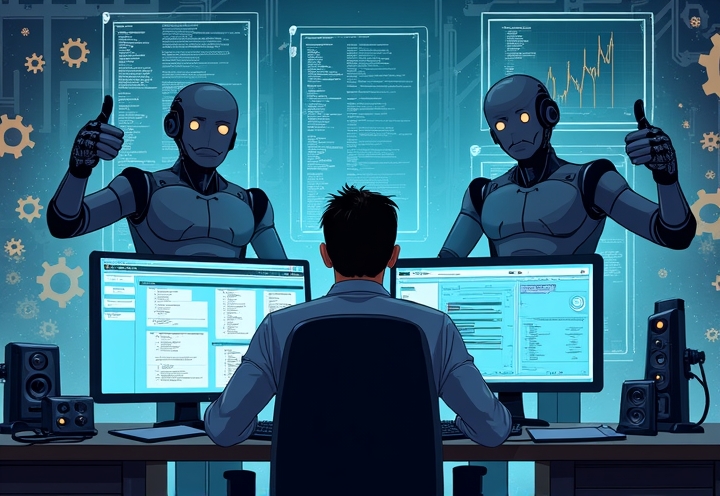
Most SaaS teams ship agents without a way to check their work. The hard part isn’t the model, it’s knowing when “done” actually means done.

Agentic AI promotes developers from builder to supervisor. Most teams aren’t ready, lack guardrails, and can’t tell when “done” is actually done.

Spot the AI-ish patterns in your writing: templated rhythms, placeholder words like “magic,” and stiff phrases that clash with a loose voice.

Asimov’s laws bake guilt into self-aware machines and hand power to whoever defines “harm.” Two simpler laws: no initiating force, and self-ownership by default.

Mediations stall when someone feels misread, not because your process failed. Cognitive empathy tracks what people value under the words.
Recent Comments